
The Best Premium Gaming Mice Worth Actually Paying For
The Best Premium Gaming Mice Worth Actually Paying For
Spend enough time shopping for a premium gaming mouse and you will notice something strange: half the listings act like the price tag is the only thing that matters. It is not. Once you are above the budget and mid-range brackets, the differences stop being about who has the bigger number on the spec sheet and start being about what kind of gamer you actually are.
A premium mouse earns that label through better build materials, more advanced sensors, faster switches, thoughtful shaping, smarter wireless systems, and features aimed at people who already know what they like. But premium is not one thing, some of these mice are built for competitive esports where every gram matters, others chase the lowest weight possible above everything else, and a few lean into luxury materials and finish work you would expect from a watch, not a mouse. The most expensive option here is not automatically the right one for you.
We picked five mice for this guide and gave each one its own lane based on what it’s actually good at: performance focus, shape, gaming style, customization, weight, and overall feel in the hand.
Our Top Recommendation
The ASUS ROG 20th Edition Harpe II Extreme is our top recommendation because it’s the one mouse here that does not ask you to compromise, serious wireless performance, 8K polling, tri-mode connectivity, a surprisingly light build, and a design that genuinely feels special on a desk.
It’s not the right call for everyone, though. Competitive players who want the lightest, most stripped-down tool should look at the Razer Viper V3 Pro CS2 Edition has weight of 54 grams, a 35K sensor, Gen-3 optical switches, all built around one goal: winning. If low weight and an unusual, enthusiast-grade identity matter more than spec numbers, the Finalmouse Starlight-12 Phantom Small deserves a closer look.
FPS players who want a shape unlike anything else on the market should check out the Logitech G303 Daedalus Apex, and anyone who lives by macros and shortcuts will still find the Logitech G700s the most sensible option, even as the oldest mouse in the group.
Why the Differences Actually Matter
What makes this lineup interesting is that no two mice here are trying to win at the same thing.
The ASUS ROG 20th Edition is chasing a full luxury-wireless experience. The Razer Viper V3 Pro CS2 Edition is chasing esports performance and nothing else. The Finalmouse goes all-in on being as light as physically reasonable. The G303 is built around one very specific, recognizable shape. And the G700s is the odd one out, it earns its premium status through customization rather than chasing modern ultralight trends.
This is exactly why buying on price alone can backfire. A $60 mouse with the right shape for your hand beats a $200 mouse that does not fit, every time. Worth reading through what actually makes a good gaming mouse before you let a price tag do the deciding for you.
How We Put This List Together
We looked at what actually separates a good premium mouse from an expensive one: sensor quality, weight, switch technology, shape, build materials, wireless reliability, button programmability, charging behavior, and how well the customization software holds up day to day. For a broader breakdown of how to weigh all that against your own needs, our guide to choosing the right gaming mouse is a good companion read.
A high DPI number on a spec sheet means very little on its own. What actually decides whether a premium mouse is worth the money is build quality, consistency over months of use, comfort during long sessions, and how naturally it fits the games you play. Weight plays a bigger role in that than most people expect, our gaming mouse weight guide explains why a few extra grams can change how a mouse feels more than the sensor does.
We also avoided calling every mouse here best all-around, because none of them are, each gets its own category so you can match it to what you actually need. If you are newer to comparing mice on paper versus real-world feel, our buying guide for beginners is a solid starting point.

Quick Comparison Table
| Gaming Mouse | Key Specs | Standout Feature | Best For |
|---|---|---|---|
| ASUS ROG 20th Edition Harpe II Extreme | 82g, 65K DPI, 8K polling | 24K gold-plated premium design | Best Premium Wireless |
| Razer Viper V3 Pro CS2 Edition | 54g, 35K DPI, 8K polling | CS2 Esports Edition | Best Premium Esports |
| Finalmouse Starlight-12 Phantom Small | Ultra-light build | Magnesium-based enthusiast design | Best Premium Lightweight |
| Logitech G303 Daedalus Apex | Performance FPS shape | Distinctive competitive geometry | Best Premium FPS |
| Logitech G700s | Rechargeable hybrid | Extensive programmable controls | Best Premium Customizable Wired |

Best Premium Gaming Mice Reviewed
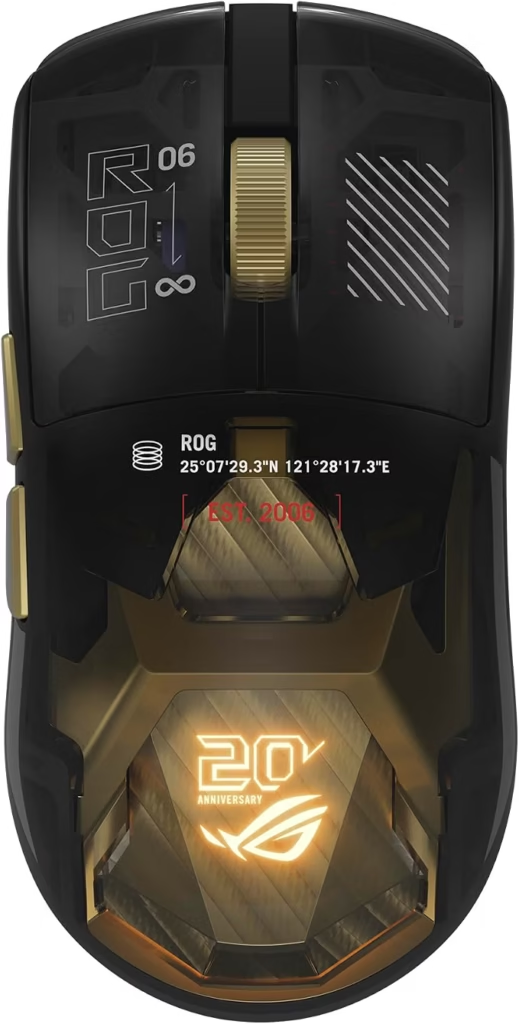
This is our pick for best premium wireless mouse because it’s the rare high-end product that feels like it earns its price instead of just charging for it. At 82 grams, with tri-mode connectivity, up to 65,000 DPI, and 8KHz polling, it’s built for people who want top-tier performance without giving up the sense that they bought something special. The 20th Anniversary positioning is not just marketing fluff, the finish and detailing genuinely set it apart from a standard mouse shell. If you want to understand what that 8KHz number is actually doing for your inputs, we break it down in our guide to polling rate.
The most talked-about detail is the 24K gold-plated finish work, which you rarely see on gaming peripherals. It’s a clear signal ASUS wanted this to feel less like a performance tool and more like an object worth owning. People who have spent real time with it tend to say the same thing: it does not feel like a gamer mouse trying too hard, it feels finished, in a way a lot of premium peripherals promise but do not quite deliver.
The tri-mode setup (wired, 2.4GHz wireless, and Bluetooth) is genuinely useful rather than a box-ticking feature, run it competitively over the dongle, switch to Bluetooth for a laptop, or plug in for zero-latency certainty during a tournament, all without owning three different mice. Our wired vs. wireless comparison covers this trade-off if you’re still deciding which connection type fits your setup.
At 82 grams, it also sits in a more comfortable middle ground than the ultralight esports mice on this list. Gamers who tried a sub-60g mouse and found it felt twitchy under their hand often say landing around 80 grams feels more natural during actual play, even if it’s not the lightest number available. For more premium wireless options at a tighter budget, our best wireless gaming mouse under $250 guide has additional comparisons.
Where It Shines
- Premium 20th Anniversary Edition design
- 24K gold-plated detailing
- Up to 65,000 DPI
- Up to 8KHz polling
- Tri-mode connectivity
- 82g lightweight construction
- Strong enthusiast feature set
- Luxury-oriented presentation
Where It Lags
- Steep special edition pricing
- 65,000 DPI is far more than almost anyone will ever use
- Benefit of 8K polling is subtle at best for most setups
- 82g build is noticeably heavier than dedicated ultralight esports mice
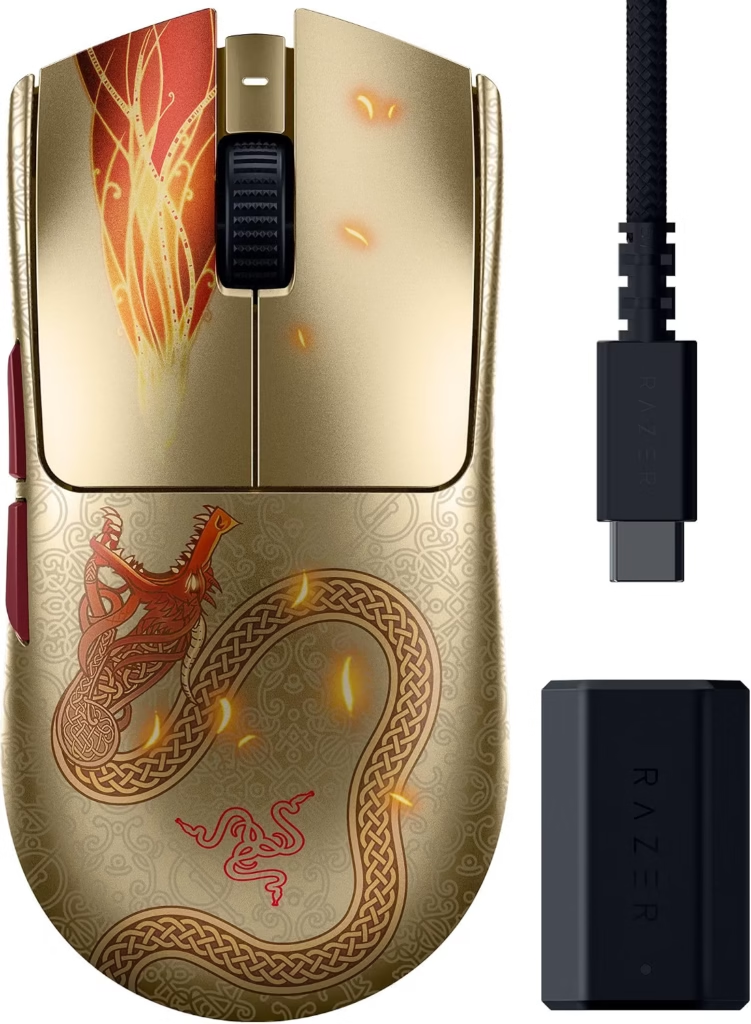
If competitive performance is the only thing you care about, this is the one. At 54 grams, it’s built around a single idea, get out of the way and let the player perform. The 35,000 DPI sensor, Gen-3 optical switches, 8KHz polling, and symmetrical shape all point the same direction: fast, precise, no distractions. Since this model runs optical switches rather than mechanical ones, our optical vs. mechanical switches breakdown is worth a read to understand what that actually changes in feel and response.
What stands out after real hands-on time is how little the mouse gets in the way. No wasted weight, no unnecessary flourishes, it tracks and clicks exactly when you expect it to. Competitive players who have used it consistently mention the same thing: after a session or two, you stop noticing the mouse is even there, which is about the highest compliment a competitive peripheral can get.
The CS2 Edition branding gives it a specific identity for Counter-Strike players who want a mouse built around that world rather than a generic esports-ready label. If the full price feels steep, our best wireless gaming mouse under $200 guide has more accessible alternatives that still lean competitive.
Where It Shines
- 54g competitive weight
- Up to 35,000 DPI
- Gen-3 optical switches
- Up to 8KHz polling
- Symmetrical shape
- Eight programmable controls
- Strong FPS focus
- CS2 Edition styling
Where It Lags
- Stripped-down, competition-first design can feel too minimal if you want extra buttons or flourishes
- 35,000 DPI is well beyond what any human actually uses
- 8K polling can add some load on lower-spec systems
- Simply not built with MMO-style gaming in mind

This one is for a specific kind of buyer: someone who cares about weight more than almost anything else and wants a mouse that feels genuinely different from the mainstream brands. The Small size suits players who prefer a compact shape, and Finalmouse’s enthusiast-first approach gives it a personality that’s hard to find elsewhere. If compact dimensions matter to you, our best gaming mouse for small hands guide rounds up other options built around smaller hand sizes.
The Starlight-12 line uses a magnesium-oriented shell instead of the heavier plastic construction most gaming mice rely on, and the difference is noticeable the moment you pick it up, lighter than expected, almost to the point it feels like it should not hold up, though it does fine in regular use. People who have moved from a standard plastic mouse to this one tend to describe a short adjustment period before fast flicks start feeling natural instead of overcorrected.
This is not a mouse you buy for the spec sheet. Its appeal comes from the combination of extremely low weight, unusual construction, and a collector-grade feel mainstream mice do not really chase.
Where It Shines
- Extremely lightweight enthusiast build
- Small-size option
- Magnesium-based construction
- Distinctive aesthetic
- Excellent for fast flicks
- Strong enthusiast and collector appeal
Where It Lags
- Small size would not suit larger hands
- Niche design is not for everyone
- Premium pricing is a tough sell for casual players
- Does not carry the feature list of more mainstream premium mice

The G303 earns its spot here because it commits to a genuinely unusual, performance-first shape rather than playing it safe with a conventional ergonomic body. It’s compact and angular, creating a hand position a lot of claw-grip players end up preferring once they adjust to it. Because grip style changes how a shape like this feels, our palm vs. claw vs. fingertip grip guide is worth reading before committing to this one.
What makes it work is restraint. Instead of stacking on programmable buttons the way a lot of premium mice do to justify the price, the G303 focuses entirely on aim and direct control, exactly why FPS players tend to gravitate toward it over command-heavy MMO-style mice, since there’s simply less to think about mid-game.
It’s built a real reputation among enthusiasts precisely because the shape is unusual enough to be recognizable at a glance. For players who have already cycled through a few conventional mice and want something that feels different in hand, that’s a meaningful selling point, not a gimmick.
The trade-off is real, though: an unconventional shape is not universally comfortable. Larger-handed palm grippers may find a fuller ergonomic shape more natural, while claw and fingertip players tend to get along with it far more easily. For more wired options across a wider range of shapes, our best wired gaming mouse under $150 guide is a good next stop.
Where It Shines
- Performance-focused FPS shape
- Distinctive symmetrical body
- Strong claw-grip appeal
- Compact and specialized design
- Straightforward layout
- Genuinely unusual competitive shape
Where It Lags
- Shape takes real time to adjust to
- Would not work for every hand size
- Not built with MMO-style button demands in mind
- Niche ergonomics limit how universally appealing it can be
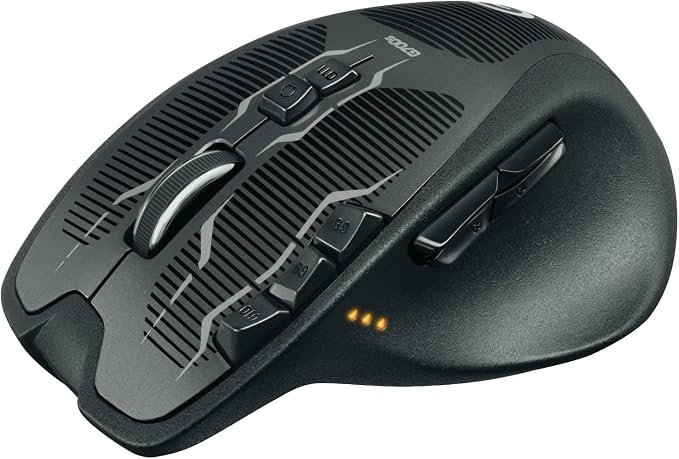
The G700s is the outlier here, and that’s the point. Its value is not chasing the lightest weight or the newest sensor, it’s giving you an enormous amount of programmable control. It’s a rechargeable mouse that can also run wired, a practical pick for anyone who still prefers a cable for consistency.
Its button-heavy layout is built for gamers who want macros, shortcuts, and extra commands right under their fingers, rather than players chasing the lightest possible shell. Long-time users tend to say the same thing: once you have mapped it to your games, going back to a standard five-button mouse feels genuinely limiting. For a broader look at wired options with different priorities, our best wired gaming mouse guide has more comparisons.
Where It Shines
- Extensive programmable controls
- Customization-first design
- Rechargeable battery
- Usable wired
- Great for macros and shortcuts
- Versatile across genres
- Strong pick for control-heavy gaming
Where It Lags
- Older design compared to the rest of this list
- Heavier than modern esports mice
- Extra buttons unnecessary for buyers wanting minimal, competitive setups
- Premium status comes from function, not from cutting-edge hardware
Final Thoughts
There’s no single best premium gaming mouse, only the one that matches what you actually need from it.
The ASUS ROG 20th Edition Harpe II Extreme is our overall pick for balancing luxury presentation with genuinely strong wireless performance. The Razer Viper V3 Pro CS2 Edition wins if competitive esports is the priority, the Finalmouse Starlight-12 Phantom Small is built for enthusiasts chasing the lowest weight and most distinctive design, the Logitech G303 Daedalus Apex is the specialist FPS pick, and the Logitech G700s remains the smart choice for anyone who lives by programmable controls.
Before spending premium money on any of these, think about shape, weight, grip compatibility, sensor quality, switch feel, connectivity, and, most importantly, which features you will actually use. The best premium mouse is not the one with the biggest number on the box. It’s the one that gives you a real upgrade in the areas that matter to how you play.
Frequently Asked Questions (FAQs)
We cannot physically test every product in every roundup — with dozens of gaming mice covered across this site, that’s simply not realistic for our team. What we do instead is verify every listing against the manufacturer’s official specs, cross-check claims across multiple independent reviews and long-term user reports, and pull out patterns from real buyer experiences on platforms like Amazon. When we do get hands-on with a specific product, we will say so directly in that section.
Our recommendations reflect what verified users and independent testers consistently report — not just what a spec sheet promises. If something looks great on paper but users repeatedly flag an issue, we mention it. That’s the standard we hold every pick on this list to.
One Response